 There are moments in life when we realize how crowded our inner world has become, not with noise, but with expectations. Advent begins by inviting us to notice this quiet clutter—not to shame us, but to make space where hope can breathe again.
That is the heart of the Gospel this Sunday. Matthew tells us that John the Baptist appears in the wilderness, proclaiming, “Repent, for the kingdom of heaven has come near” (Matthew 3:1–2). His message isn’t polished. It isn’t gentle. But it is honest. John speaks to people who, like us, carry far more than they admit. His call to “repent” isn’t about guilt; it’s about turning around so we can finally face the One who brings life.
John chooses the desert for this announcement. The wilderness strips away what’s unnecessary. It makes the essentials visible. In that raw landscape, the truth feels closer, and John’s words feel less like a command and more like an invitation: “Let go of what drags you down. Make room for the One who comes.”
Then come the images many of us try to avoid—the axe laid at the root, the winnowing fork in hand, and the fire that burns the chaff (Matthew 3:10–12). These images sound harsh until we ask what John is really describing. The axe cuts what no longer bears fruit. The winnowing fork lifts grain so the wind can take what is hollow. The fire burns away only what cannot nourish us. These are not images of punishment but of release.
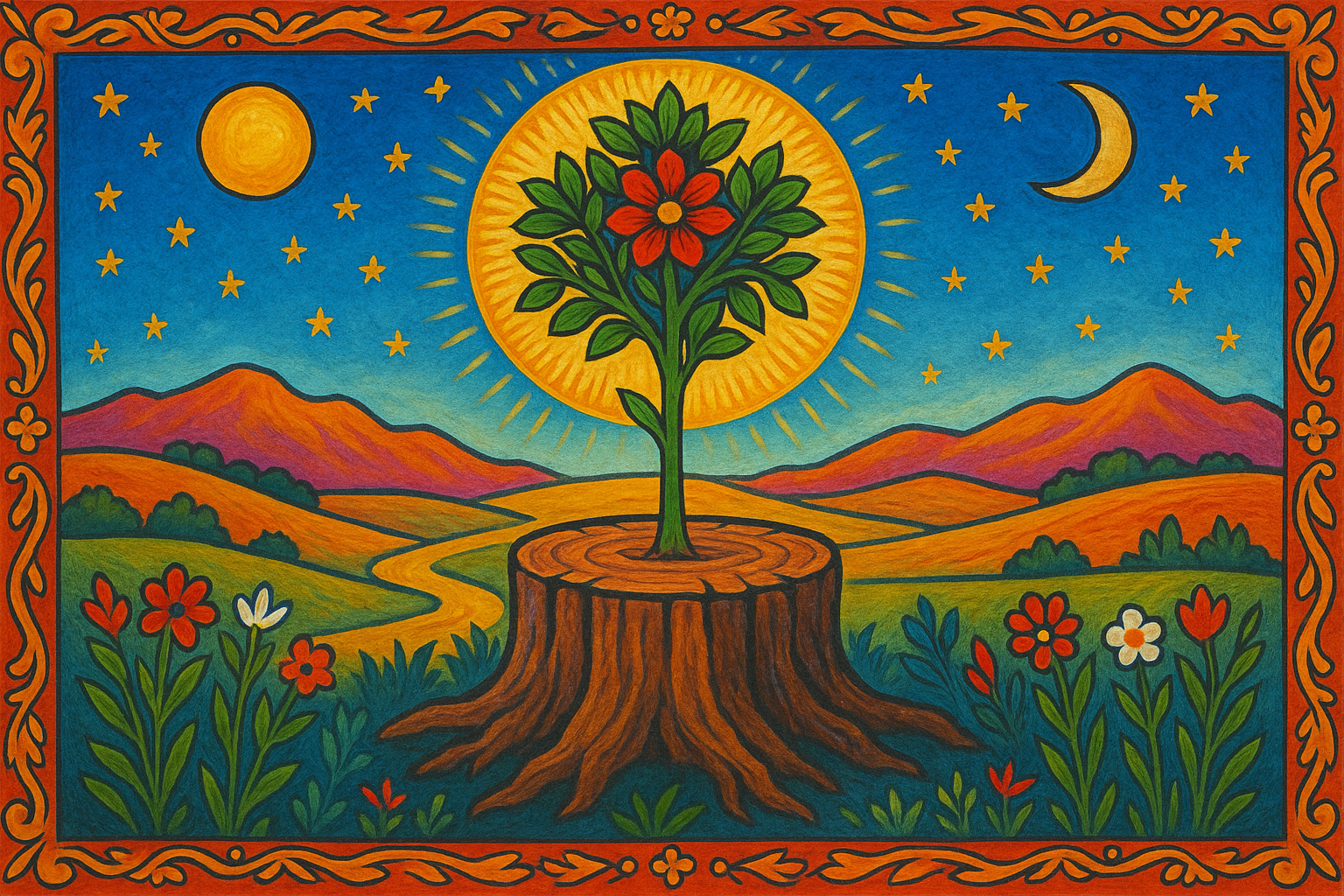
Isaiah gives us the picture on the other side of this clearing. “A shoot shall sprout from the stump of Jesse” (Isaiah 11:1). A stump looks like the end of the story. It is what remains after loss or failure. It is the symbol of what once was and can never be again. Yet Isaiah insists a branch can still rise. Life can still break through old wood. Hope can still surprise us.
John prepares us for that surprise. He urges us to cut away the habits or fears that choke the soil. Advent is the season where God gets close enough to touch the root system of our lives and do some careful pruning.
Paul, writing to the Romans, adds that Scripture gives us encouragement so “that we might have hope” (Romans 15:4). Not manufactured hope. Not surface-level positivity. Hope that emerges from God’s steady work beneath the surface—work we often don’t see until something new begins to grow.
here is a deep comfort in John’s message. He does not ask us to clear the whole desert or to fix everything at once. He simply asks for space—for a path to be opened. Most of us don’t need a dramatic overhaul; we need one honest turning. One small clearing. One decision to loosen our grip and let God breathe into the tight places.
And part of that turning is how we see and treat those who are pushed to the edges of our society. Advent does not let us look away from the people whose lives are made harder by fear, suspicion, or indifference—especially migrants and refugees who carry stories of loss that echo the wilderness itself. Repentance means stepping back from attitudes that harden our hearts and stepping toward the compassion Jesus shows in every encounter. It means noticing the dignity we’ve overlooked and allowing God to soften what has grown rigid in us so we can make room for others to breathe and belong.
Advent promises that God is already moving toward us. The work is not ours alone. The clearing is shared. The turning happens with grace.
John’s voice in the wilderness is not a threat. It is a rescue. He calls us back to the God who still brings life from stumps, who still separates the good grain from the chaff, who still prepares a way in places we thought were impassable.
This is why the Eucharist becomes our teacher. When we come forward with open hands, we are practicing what John preaches. We set aside our clutter long enough to receive what we cannot earn: God’s presence offered freely, God’s strength given gently, God’s hope placed in us like seed in good soil. The table becomes the clearing where God restores what has been cut down and brightens what has grown dim.
Advent promises that God is not finished. Not with us. Not with our story. Not with the desert.