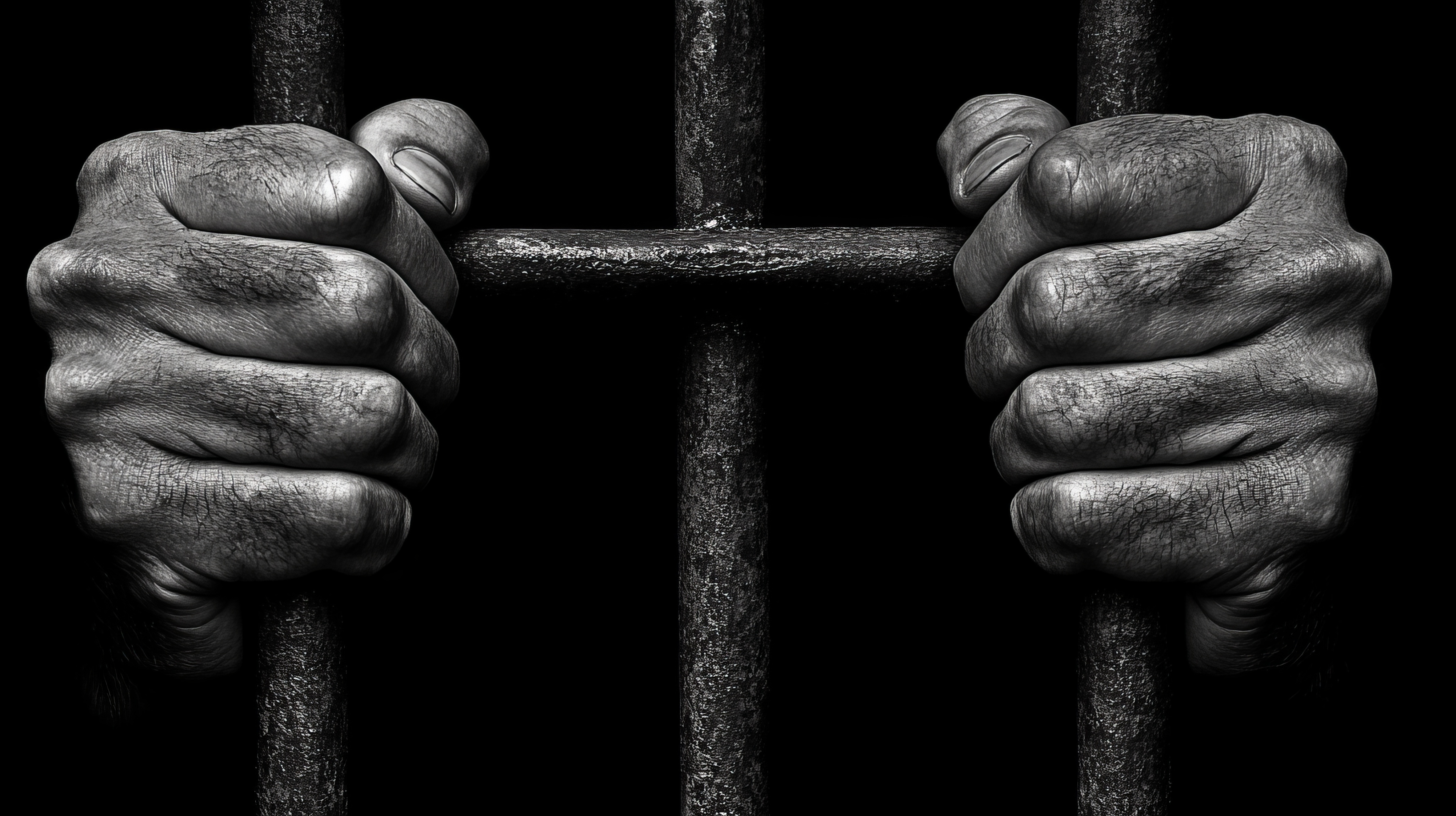
The basement of the Los Angeles ICE facility is cold. The lights hum. The walls echo. Families stand in a narrow waiting area built for one purpose: to hold them outside a locked door they have no power to open.
A father rubs the back of his neck to keep from shaking as he waits to see his son. A grandmother whispers the Padre Nuestro under her breath. A young woman keeps checking the time because her ride home might leave without her. Everyone there knows this place was not built with mercy in mind. It is a space where hope arrives in small, stubborn flickers.
That scene came back to me as I prayed with Mark 1:40–41, where a man with leprosy comes to Jesus and begs, “If you wish, you can make me clean.” The Gospel says Jesus was “moved with pity,” a phrase that means more than feeling sorry. It means his whole body responded. He reached out, touched the man, and restored him. In a world that told him to keep his distance, Jesus drew close. In a system that pushed the sick outside town, Jesus stepped toward the one no one else would touch.
For communities of faith, this moment is not only a miracle but a map. Jesus shows us what it looks like to step into places where fear has claimed too much power. He shows us how to draw near to the ones our society keeps at arm’s length—not with pity, but with presence. Not with talk, but with touch. In our time, that includes migrants, detainees, low-wage workers, and families living on the edge of being forgotten.
And still—despite the need, despite the pleas, despite the quiet ache of families waiting in those cold hallways—community chaplains are kept outside. Not once or twice, but again and again. We are told it’s a matter of process or timing or security. But people of faith know better. When care is withheld from those who suffer, it is not a paperwork problem. It's a wound.
Let’s be honest in the way Jesus was honest: this kind of barrier is not neutral. It distorts the dignity God gives. It leaves frightened people to carry their fear alone. And whenever followers of Christ allow that kind of isolation to stand—whether through silence, delay, or indifference—we drift away from the pattern of the one we claim to follow.
When the man with leprosy begged, “If you choose, you can make me clean,” Jesus didn’t hesitate. He didn’t form a committee, file a form, or wait to hear from Washington. He said, “I do will. Be made clean.” Just like that. A clear, immediate yes to someone who had suffered long enough. In a country that often calls itself Christian, granting chaplains access should be just as simple. No one should have to beg for the spiritual care Jesus gave without hesitation. The Gospel shows us that divine compassion does not wait.
Catholic Social Teaching reminds us that every person—without exception—possesses an unbreakable dignity because they are made in God’s image. That dignity does not disappear in detention. It does not depend on paperwork or nationality. When we deny people access to spiritual care, we deny part of what makes us human.
This is where the Gospel presses on us.
When Jesus touched the man with leprosy, he did more than heal a body. He restored someone who had been pushed to the edges for years. He broke a silence that had crushed a life and returned a man to his community. He showed that God’s compassion does not wait for permission from those in power.
Communities today can follow that same pattern—not by storming buildings or shouting at officials, but by taking up the quiet, steady work of accompaniment. We show up. We stand at the locked door. We pray with our feet. We write letters to detainees who fear they have been erased. We train volunteers who can help families navigate hearings. We walk with people who have been ignored and dehumanized. We refuse to let anyone face abandonment alone.
This is how hospitality becomes resistance. It interrupts the lie that some lives matter less. It heals divisions by placing human hands and hearts where systems have left cold distance. It echoes Jesus’ choice to cross the boundary no one else would cross.
Some will say this work is too small to matter. But the Gospel is filled with small acts that changed the world: a touch, a word, a shared meal, a door left open. When fear tries to dictate the terms of community life, believers respond by widening the table. When people are pushed to the margins, disciples place themselves there too, because that’s where Jesus tends to go.
And in those basement waiting areas—in the lines, the silence, and the heavy air—God is already moving. You can see it in the neighbor who hands a stranger a bottle of water. In the woman who brings extra insulin or rosary beads for someone she’s never met. In the quiet prayers spoken by people who are not sure anyone hears them. These are not grand gestures. They are seeds of the kingdom Jesus proclaimed.
The Gospel calls us to break the silence that keeps suffering hidden underground. It calls us to make room for those who carry heavy burdens. It calls us to stand in the places where hope seems thin and say, with our presence, that God has not forgotten anyone.
Evil may build walls, but Christ has a way of walking through them. And when communities choose courage over silence, tenderness over fear, and dignity over indifference, the kingdom of God draws near—often in ways we do not expect, carried by ordinary people who refuse to stop showing up.